
What is Halal Certification in Saudi Arabia?
Halal Certification in Saudi Arabia – What Does It Mean and Where Is It Most Commonly Used?
What are the steps to get Halal Certification in Saudi Arabia?
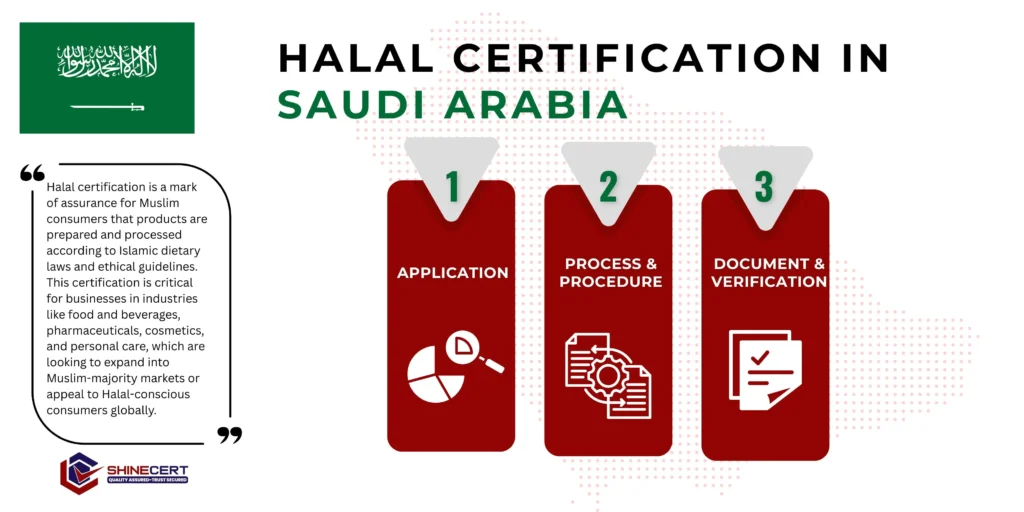
What is Halal Certification and Why Does it Matter in Saudi Arabia?
- ISO Certification Saudi Arabia
- ISO 9001 Certification
- ISO 14001 Certification
- ISO 45001 Certification
- ISO 27001 Certification
- ISO 22000 Certification
- ISO 13485 Certification
- ISO 17025 Certification
- ISO 20000-1 Certification
- ISO 22301 Certification
- ISO 31000 Certification
- CE Mark Certification
- Halal Certification
- GDPR Certification
- HIPPA Certification
We Are in Major City's
Step-by-Step Halal Certification Process in Saudi Arabia
We review key elements of your operations to determine Halal compliance, including:
- Ingredients and raw materials
- Suppliers and sourcing
- Production and handling processes
Common gaps include undeclared ingredients, cross-contamination risks, and weak supplier verification.
We support preparation of Halal documentation, including:
- Ingredient and raw material declarations
- Supplier Halal certificates
- Process flow diagrams
- Halal policy and procedures
All inputs are verified to ensure full Halal compliance.
Halal controls are implemented across all relevant areas, including:
- Procurement
- Production
- Storage
- Transportation
We provide Halal awareness training to ensure staff understand proper handling, segregation, and hygiene requirements.
An internal Halal audit verifies:
- Ingredient control
- Process segregation
- Hygiene and sanitation practices
- Record maintenance
Any identified gaps are corrected before the certification audit.
An approved Halal certification body conducts the Halal audit.
Upon successful verification of compliance, the Halal certificate is issued and is typically valid for one year, subject to surveillance or renewal requirements.
Halal certification is issued only after successful audit compliance by the certification body.
Benefits of Halal Certification in Saudi Arabia
- Market access in Saudi food and consumer market
- Muslim consumer’s trust
- Access to retail, hospitality, and export
- Better control and traceability of processes
- Compliance to global Halal standards
- Gained edge over competitors in Muslim-dominate market
Halal Certification & ISO Integration
Halal Certification Requirements in Saudi Arabia
Halal Certification Cost in Saudi Arabia
Why Choose Shinecert for Halal Certification in Saudi Arabia?
Let’s Collaborate with Us!
Yes, to sell any consumer goods in Saudi Arabia, including food, one has to obtain halal certification. This is the case even for packaged food, meat, and poultry.
Halal certificates are given by various halal certification authorities. Shinecert provides support for prep and audits.
Yes, the Saudi halal certificate is recognized in most countries, especially in countries with a Muslim majority.
Yes. Even cosmetics, cleaning products, and pharmaceuticals can be halal certified retail products.
Halal certificates are typically valid for one year, with some conditions for renewal and additional surveillance.
No. Certification depends on successful audit outcomes by an accredited certification body. Shinecert ensures you are fully prepared and compliant.
Get Halal Certified in Saudi Arabia with Shinecert
If your business serves the Saudi or Muslim consumer market, Shinecert ISO Consulting and Certifications can guide you from Halal gap analysis to certification audit readiness.
Contact Shinecert today for a free Halal certification consultation in Saudi Arabia.
Request Free Consultation